By the ChowChow Labs editorial team · Updated November 6, 2026 · How we check our content
Reading a sign by its shape
Safety recommendation
Shape is a shortcut you can read before the words are legible. An eight-sided sign always means stop. A downward-pointing triangle means give way. Diamonds warn about something ahead, and a round yellow sign is reserved for a rail crossing.
Example: At dusk you can't yet read a sign, but you can see it's a diamond. You already know it's a warning, so you lift off the gas and look for the hazard.
Check the official wording in the California Driver Handbook.
Turning right on a red light
Legal rule
California allows a right turn on a steady red ball after a complete stop, unless a sign forbids it. You still have to let pedestrians and nearby traffic go first. A red arrow is different: it does not allow the turn at all until it changes.
Example: You stop at a red ball, see no NO TURN ON RED sign, and wait for a jogger to clear the crosswalk before turning.
Check the official wording in the California Driver Handbook.
Yellow lights, steady and blinking
Legal rule
A steady yellow warns that red is next: stop if you can do it smoothly, otherwise continue with care. A blinking yellow is a caution signal; you may keep going but should slow and watch. A blinking red is handled like a stop sign.
Example: A light ahead turns yellow when you are three car lengths away at 35 mph. You can stop comfortably, so you do.
Check the official wording in the California Driver Handbook.
When the signals go dark
Legal rule
If every signal at an intersection is out, act as though there is a stop sign facing every direction. Stop, then take turns using normal right-of-way rules.
Example: During a storm the lights are dark. You stop, see a car that stopped before you on the right, and let it go first.
Check the official wording in the California Driver Handbook.
Check yourself
Try these 6 questions from our free mock exams, then tap Show answer. For more, take the road signs practice test.
Question 1 · Signs and Signals
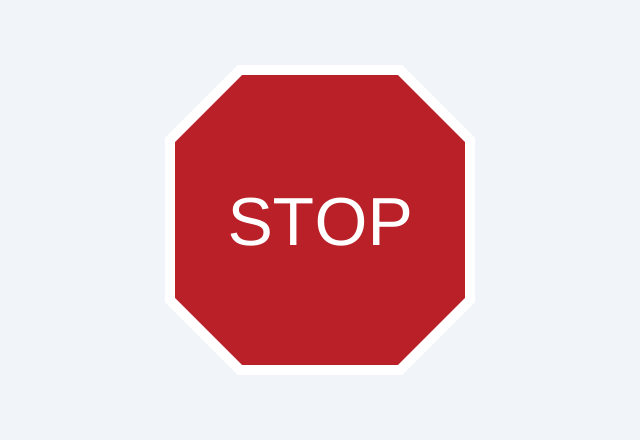
The illustrated STOP sign faces your lane. What is the appropriate response?
- A. Slow down and roll through carefully if no other vehicles or people are in sight.
- B. Stop only when another car arrives.
- C. Come to a complete stop, then yield before proceeding.
- D. Accelerate to clear the junction.
Show answer
Answer: C. Come to a complete stop, then yield before proceeding.
A stop sign requires a full stop. Afterward, check for conflicts and yield before entering.
Question 2 · Signs and Signals
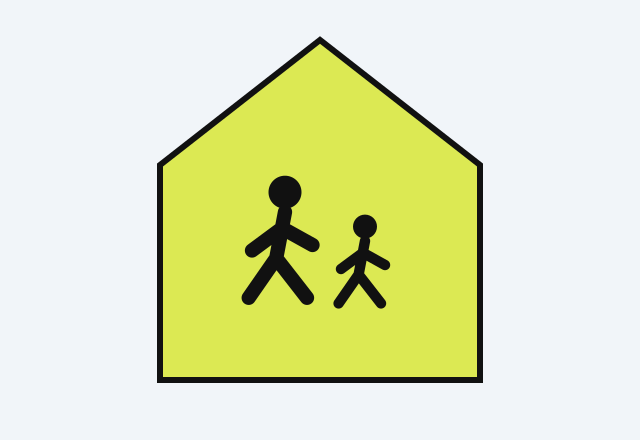
The illustrated SCHOOL sign faces your lane. What is the appropriate response?
- A. Expect children to wait on the curb, and keep moving at the normal speed limit.
- B. Sound the horn instead of slowing.
- C. Look only for cars.
- D. Watch for children and obey crossing guards and posted controls.
Show answer
Answer: D. Watch for children and obey crossing guards and posted controls.
The school warning calls attention to children; posted speed and crossing instructions still govern.
Question 3 · Signs and Signals
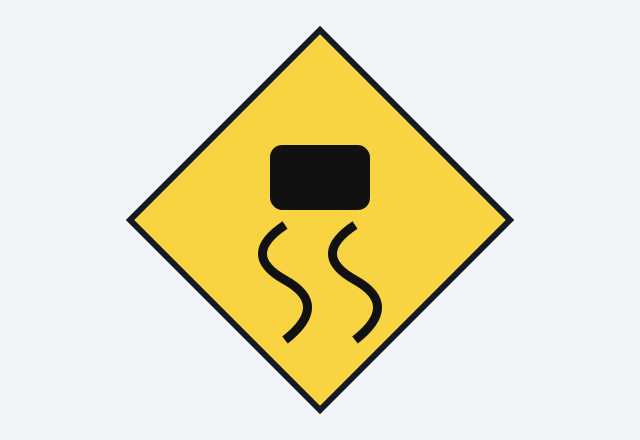
The illustrated SLIPPERY WHEN WET sign faces your lane. What is the appropriate response?
- A. Follow in the tire tracks of the car ahead at your usual distance.
- B. Assume normal traction in rain.
- C. Brake hard to test grip.
- D. Allow extra space and avoid abrupt steering or braking when wet.
Show answer
Answer: D. Allow extra space and avoid abrupt steering or braking when wet.
Water can reduce available grip, so smooth control and additional space are appropriate.
Question 4 · Signs and Signals
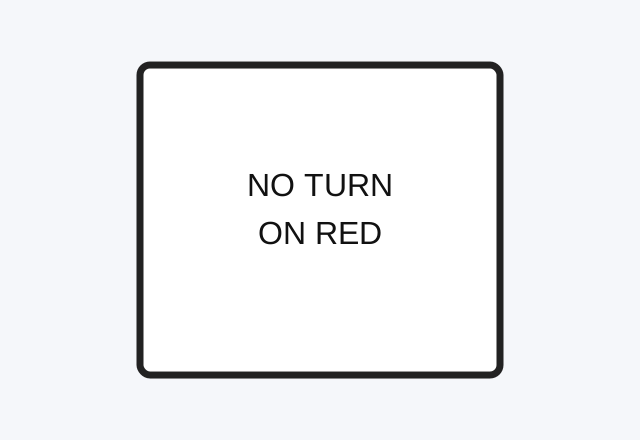
The illustrated NO TURN ON RED sign faces your lane. What is the appropriate response?
- A. Turn whenever no pedestrians are present.
- B. Turn if no cars are coming from the left.
- C. Wait for a signal that permits the turn.
- D. Turn after pausing briefly.
Show answer
Answer: C. Wait for a signal that permits the turn.
A posted prohibition prevents a red-light turn even after stopping.
Question 5 · Signs and Signals
You approach a circular red light to turn right. No sign prohibits the turn. What must happen before you turn?
- A. Slow down, check for cross traffic and turn without stopping.
- B. Treat every red light as a yield sign.
- C. Turn without checking the crosswalk.
- D. Stop fully, obey any turn prohibition, and yield before a permitted right turn.
Show answer
Answer: D. Stop fully, obey any turn prohibition, and yield before a permitted right turn.
A permitted right turn at a circular red still requires a full stop and a safe path; signs can prohibit it.
Question 6 · Signs and Signals
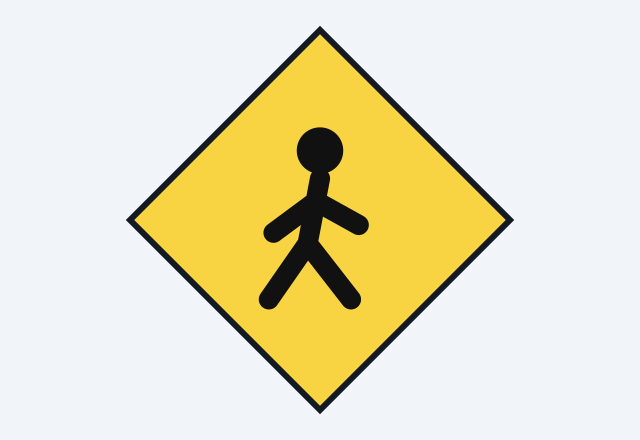
The illustrated PEDESTRIAN CROSSING sign faces your lane. What is the appropriate response?
- A. Expect people to cross only at the signal ahead, not at this sign.
- B. Scan for people crossing and yield when required.
- C. Accelerate before anyone steps out.
- D. Yield only when a horn sounds.
Show answer
Answer: B. Scan for people crossing and yield when required.
The warning calls attention to people crossing; be prepared to yield safely.
Next: Right of Way and Crossings. All-way stops, pedestrians, railroad crossings and roundabouts.